Seven-spotted Ladybug: How to Identify This Helpful Species
Seven-spotted Ladybug
Coccinella septempunctata
At a Glance
- Also known as: Seven-spot ladybird, C-7, ladybug
- Class: Insecta
- Order: Coleoptera
- Family: Coccinellidae
- Size: 7 to 10 mm long
- Active season: Spring through fall
- Diet: Aphids and other soft-bodied insects; some pollen
- Native range: Europe, North Africa, western Asia
- Range in Canada: Established across all provinces and territories
- Status in Canada: Introduced; established since the mid-1970s
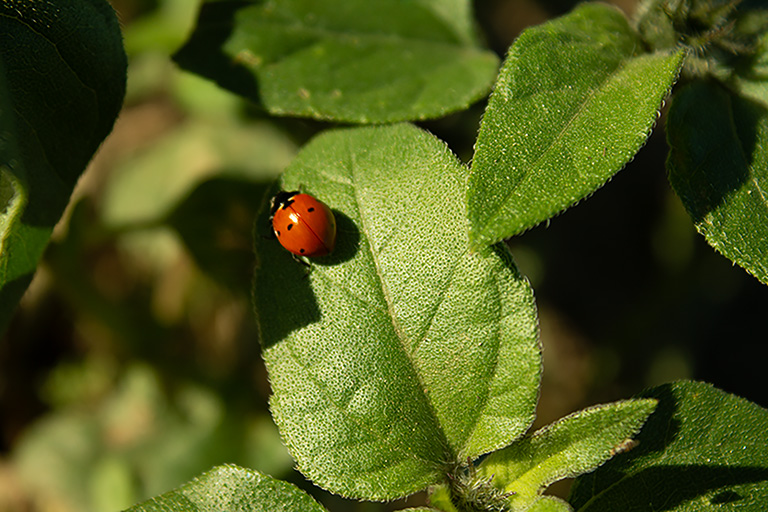
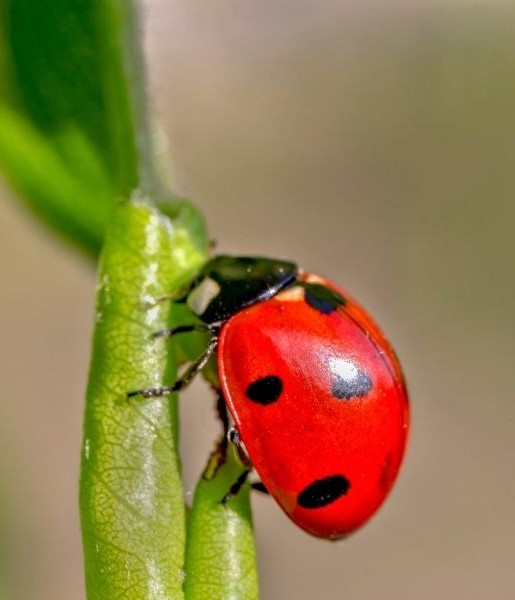
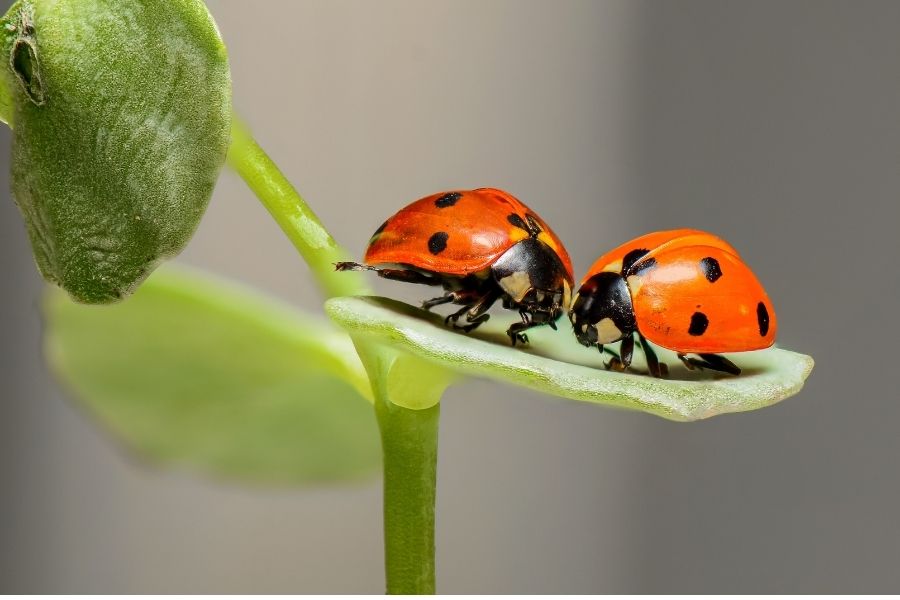
- Wing covers (elytra): bright red or orange
- Spots: typically seven black spots; three on each wing cover, plus one shared spot where the wings meet at the front
- Body: oval, dome-shaped, 7 to 10 mm long
- Larvae: dark, spiky, and orange-spotted, often described as looking like tiny alligators
- Lookalikes: Multi-coloured Asian Lady Beetle (Harmonia axyridis), variable in colour with an “M” mark behind the head; the native nine-spotted ladybug (Coccinella novemnotata)

- Adults overwinter in clusters of 5 to 10, often in sheltered spots and sometimes inside buildings
- Females lay clusters of yellow eggs near aphid colonies
- One generation typically becomes adult within a few weeks of egg-laying
- Common in gardens, agricultural fields, meadows, and roadsides
- Thrives in landscapes people have shaped
- One of the ladybugs Canadians are most likely to meet in a garden
Pocket Facts
- The seven-spotted is not native to Canada. The species evolved in Europe, North Africa, and western Asia. Beginning in the 1950s, scientists tried repeatedly to introduce the ladybug to North America as a biological control for crop-destroying aphids without success. An unintentional introduction took hold in the 1970s, and the population grew quickly.
- Ladybug spots fade as the beetle gets older, as the wing covers wear and abrade over time
- A ladybug’s wings beat 85 times per second in flight
- When threatened, ladybugs have several defences. They can play dead, and they can release a foul-smelling yellow fluid from their leg joints, a behaviour called reflex bleeding. The fluid contains toxic alkaloids. The bright red colouring is part of the same warning system: predators learn that the colour means a bad-tasting meal.
- They feed on their stored fat supply during diapause (insect dormancy)
- It takes about two weeks for a larva to reach full size. In that time, it’s an eating machine consuming up to 400 aphids before entering the pupal stage.


Sources
- Environment and Climate Change Canada. “Wild Species 2010: Chapter 14, Insects: Lady Beetles.” Canada.ca
- Calgary Pollinators. “Pollinator of the Month: Seven Spotted Lady Beetle.” iNaturalist Project Journal
- Sain, Todd. “Seven-Spotted Ladybird.” Our Breathing Planet
- The 4 Stages of the Ladybug Life Cycle
- Ladybugs – Canada.ca