Purple pitcher plant: Inside Newfoundland’s Unique Official Symbol
Purple pitcher plant
Sarracenia purpurea
At a Glance
- Other names: Purple pitcher plant, northern pitcher plant, turtle socks, side-saddle flower
- Family: Sarraceniaceae
- Type: Carnivorous perennial
- Pitcher size: 10 to 30 cm tall
- Bloom time: Late spring to early summer; a single nodding flower
- Range in Canada: Every province and territory except Yukon, with strongholds in Newfoundland and Labrador and across the boreal
- Provincial emblem: Newfoundland and Labrador (designated 1954 by the Floral Emblem Act)
- Status: Secure overall
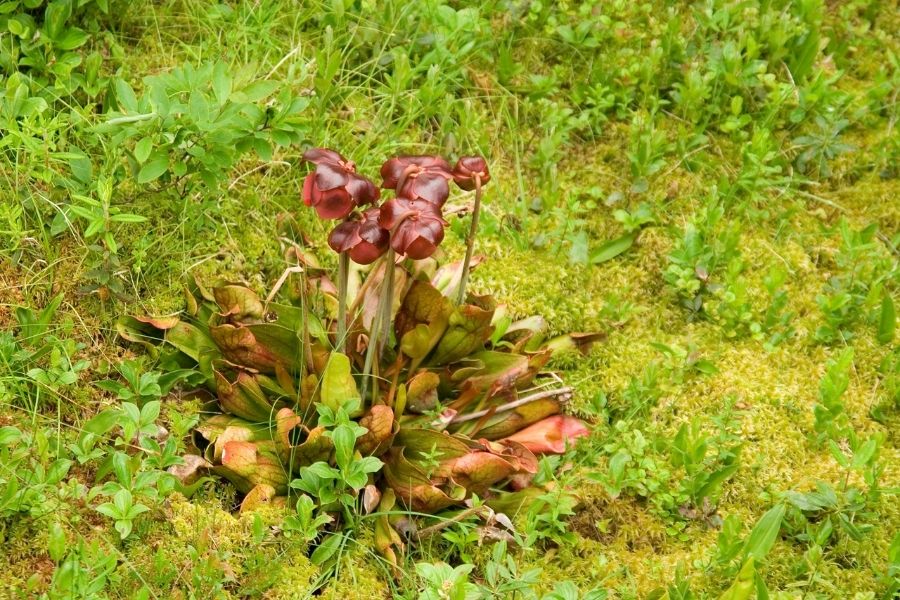
- Leaves: modified into hollow, tubular, pitcher-shaped traps that collect rainwater
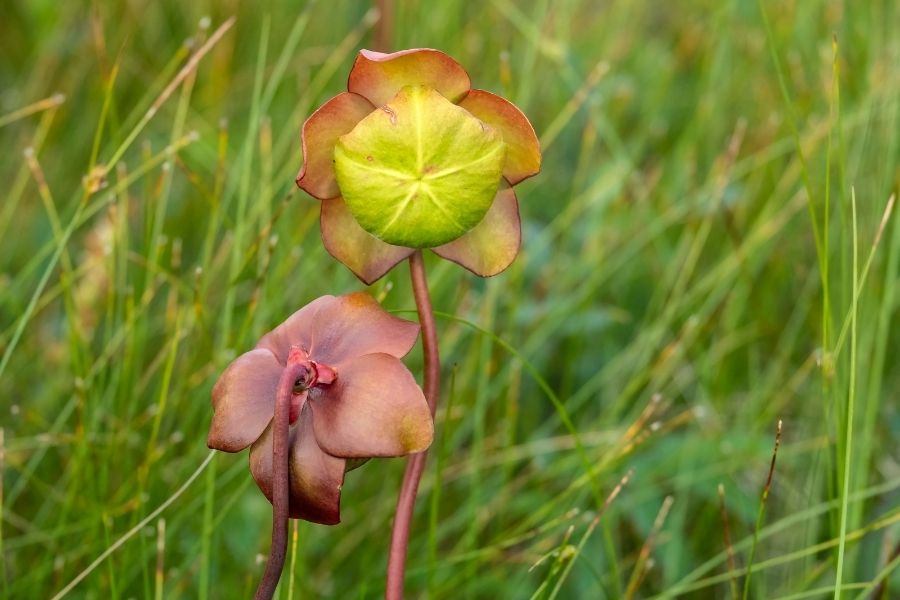
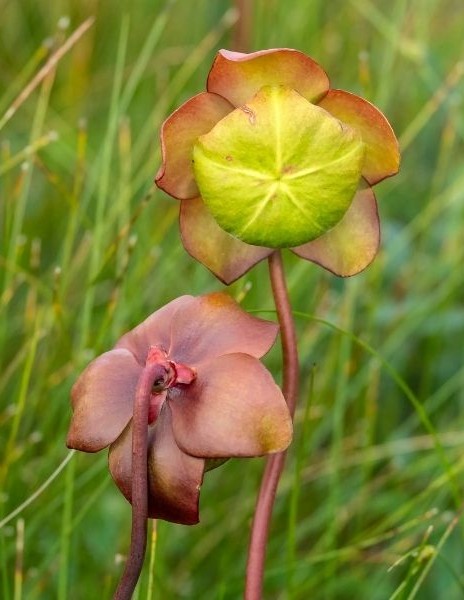
- Colour: green with prominent red or purple veins; leaves often turn wine-red in winter
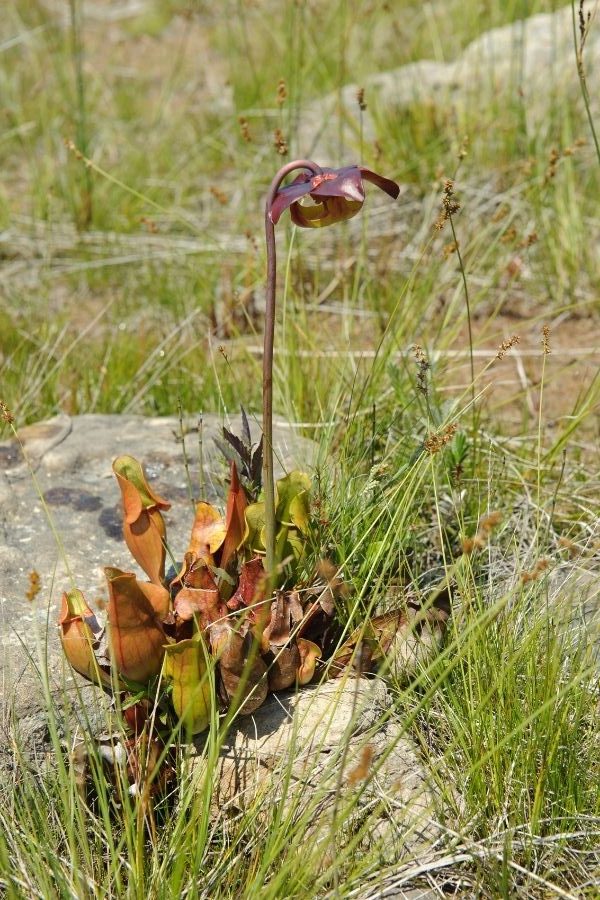
- Flower: a single dark red or purple nodding flower rising on its own stalk above the leaves
- Size: pitchers typically 10 to 30 cm long, growing in low rosettes
- Lookalikes: no close lookalikes in Canada; this is the only native pitcher plant in the country
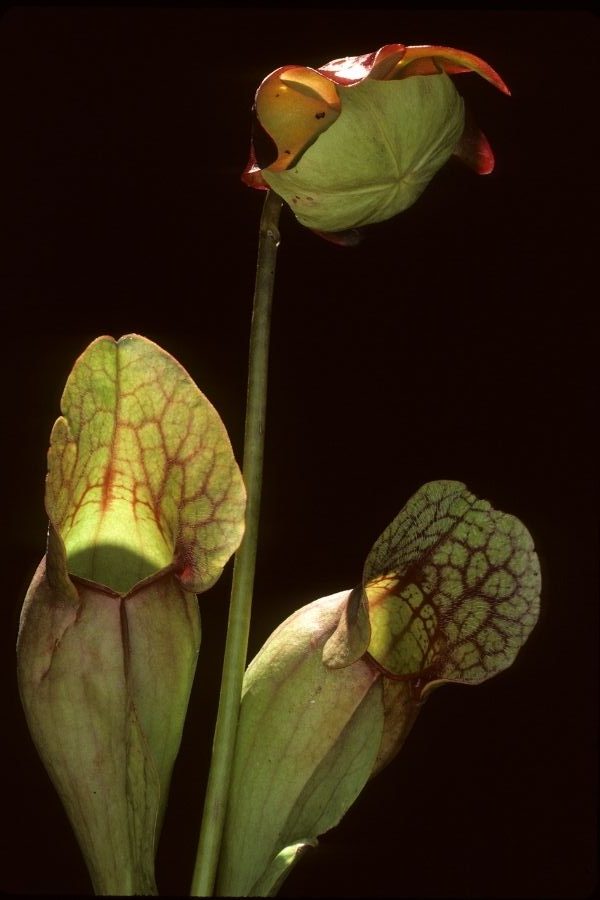
- Lure: sweet nectar around the rim of the pitcher and bright red veining attract insects
- Trap: stiff, downward-pointing hairs on the inside walls allow easy entry but prevent escape
- Slip zone: below the hairs, a waxy surface causes insects to lose footing and fall into the pool below
- Helpers: a community of mosquito and midge larvae, plus protists and bacteria, live in the pool and assist in breaking down prey
- Found in acidic, nutrient-poor bogs and fens, especially sphagnum peat bogs
- Grows in low clumping rosettes, often hidden among mosses and other bog vegetation
Pocket Facts
- The Purple pitcher plant is the only carnivorous member of Canada’s official botanical emblems. Newfoundland and Labrador, of all the provinces, chose a predatory plant for its floral symbol.
- The pitcher’s pool is not just rainwater. The plant secretes digestive enzymes into it, along with a natural wetting agent that breaks the water’s surface tension so insects can’t float on top and crawl back out. Once an insect falls in, it cannot leave.
- Most of the actual digestion is done by tenants, not the plant itself. A mosquito species (Wyeomyia smithii) whose larvae are immune to the digestive fluid, a pitcher plant midge, and a community of protists and bacteria live inside the pitcher and break down the prey. The plant absorbs the freed nutrients.
- A 2019 Ontario study found that one in five pitcher plants surveyed in Algonquin Provincial Park contained the remains of juvenile salamanders. The species’ reach is wider than its size suggests.
- The pitcher plant became Newfoundland and Labrador’s official flower in 1954, but its connection to the province is older. Queen Victoria selected it for the Newfoundland penny, and it appeared on Newfoundland coins from the Victorian era until 1938. A stylized version now appears in the modern Newfoundland and Labrador Brand Signature, adopted in 2006.
- The carnivorous habit exists because the bog does not provide. Sphagnum bogs are acidic, waterlogged, and nutrient-poor, and most plants cannot extract nitrogen from such soil. The pitcher plant solved that problem by skipping the soil and getting nutrients from the air instead.

Sources
- Memorial University of Newfoundland. “Newfoundland and Labrador’s Carnivorous Symbol.” Department of Biology.
- Government of Newfoundland and Labrador. “Symbols of Newfoundland and Labrador.” Executive Council.
- The Canadian Encyclopedia. “Pitcher Plant.”
- Parks Canada. “Pitcher Plants, Sundews, and Bladderworts.” Lake Superior National Marine Conservation Area.