

At a glance
Population
548,557
Region
Atlantic provinces
Capital
St. John's
Largest city
St. John's
Land area
358,170 km²
Highest point
Mount Caubvick, 1,652 m
Established
March 31, 1949
Time zone
NST (UTC−3:30) / NDT (UTC−2:30)
Official language
English
Official bird
Atlantic puffin
Official flower
Purple pitcher plant
Official tree
Black spruce
Population: Statistics Canada, Table 17-10-0009-01, Q1 2026 · Land area: Statistics Canada, Table 98-10-0001-01, 2021 Census · Symbols: Government of Canada, Canadian Heritage · Highest point: Natural Resources Canada, Geographical Names Data Base
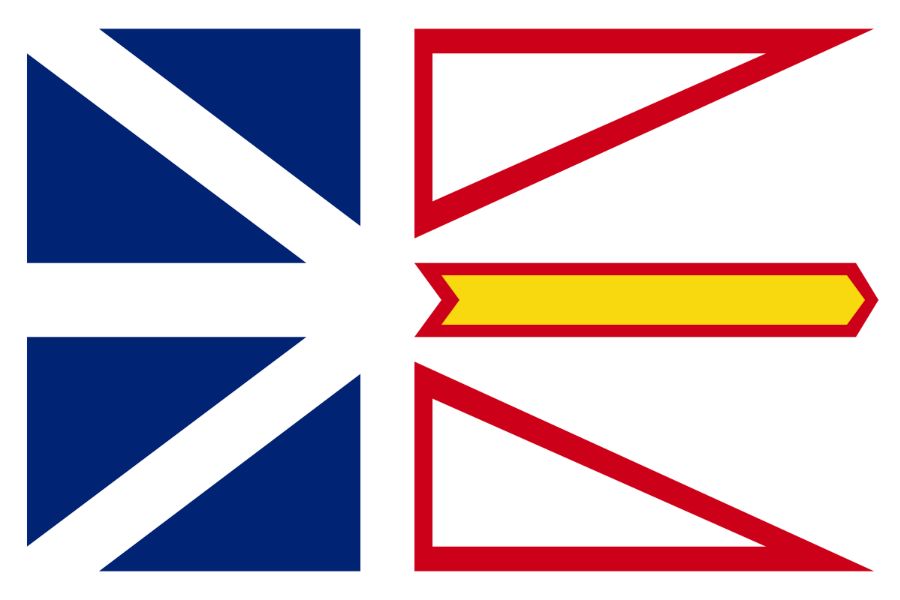
About the flag
- •Officially adopted on June 6, 1980, designed by artist Christopher Pratt
- •The primary colours of red, gold, and blue are set against white: white for snow and ice, blue for the sea, red for human effort, and gold for confidence in the future
- •The blue section, reminiscent of the Union Jack, represents the province's Commonwealth heritage
- •The two triangles represent the island and mainland parts of the province reaching forward together; a golden arrow points toward the future
Did you know?
- •First transatlantic flight: On June 14, 1919, British aviators John Alcock and Arthur Brown took off from St. John's in a modified Vickers Vimy bomber and completed the first non-stop transatlantic flight in just over 16 hours, landing in a bog near Clifden, Ireland, the following morning.
- •L'Anse aux Meadows: The only confirmed Norse settlement in North America outside Greenland, L'Anse aux Meadows dates to around the year 1000 AD and is a UNESCO World Heritage Site. It is the physical proof that Europeans reached the Americas five centuries before Columbus.
- •Wildlife: Newfoundland has no snakes, crickets, porcupines, skunks, or deer. What it does have is more than 100,000 moose, introduced to the island over 100 years ago and thriving ever since.
- •Parks and reserves: The province has three national parks, one national park reserve, 18 wilderness and ecological reserves, and botanical gardens that draw visitors from across the country.
- •Cape Spear: Just 15 kilometres from downtown St. John's, Cape Spear is the easternmost point in North America, the first place on the continent to greet the sunrise every morning. It has been a navigational landmark since the earliest European explorers arrived on this coast.