12 Canadian Foods Worth Seeking Out on Your Travels
12 Canadian Foods Worth Seeking Out on Your Travels
Food is tied to memory, place, and the people who shared the table with us… Nanaimo bars take me back to my teens. Tourtière reminds me of a woman I used to know. Butter tarts mean summertime and visits home after graduation.
One of the best reasons to travel in Canada is food and the culture that has grown up around it. Some dishes here came from survival and hard winters. Others arrived with immigrants and over time became ingrained in the country’s identity. Some are tied so closely to one region that you can’t think of the place without thinking of the dish.
These 12 Canadian foods are only a starting point. Every province, every town, and every family could make its own list. But if you want to understand Canada, sitting down at the table is a good place to begin.
- Nanaimo bars
Origin: Nanaimo, British Columbia
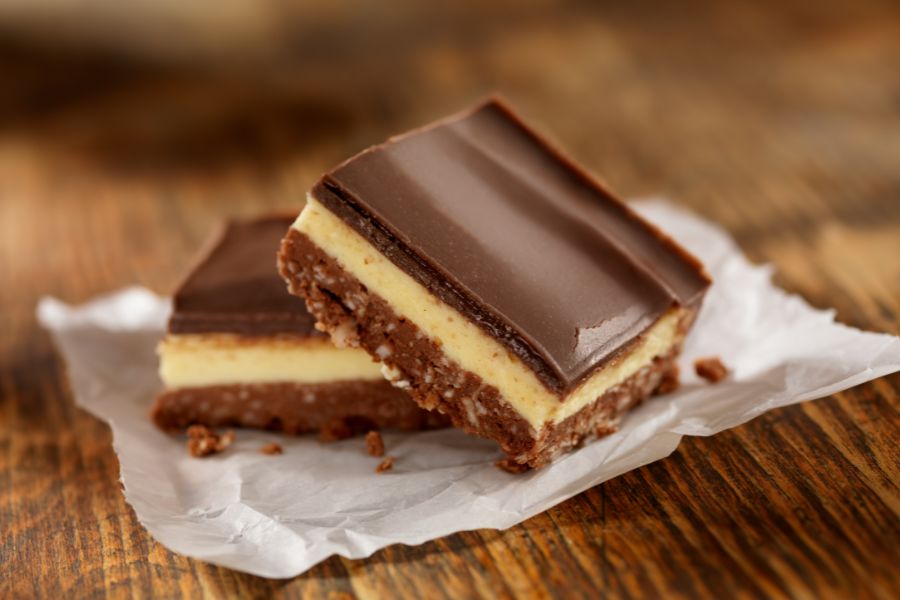
A no-bake dessert bar built in three layers: chocolate and wafer crumb base, custard buttercream centre, and a melted chocolate and butter top. This dessert is named for the city on Vancouver Island where it first appeared, though exactly who made it first remains disputed. A fixture at bake sales, potlucks, and holiday tables across the country, it is one of the few Canadian desserts recognized internationally. - Poutine
Origin: Quebec, 1950s
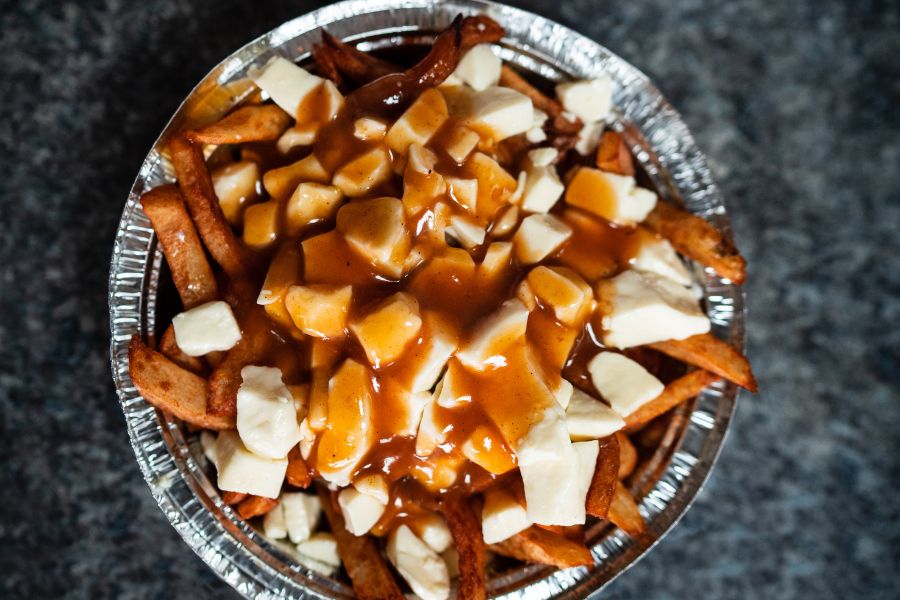
French fries topped with fresh cheese curds and smothered in gravy. Its exact birthplace is disputed among several small Quebec towns, with Warwick and Drummondville among the most persistent claimants. Once considered humble truck stop food, poutine has become one of Canada’s most recognized exports, found everywhere from fast-food chains to fine-dining menus. - Tourtière
Origin: Quebec
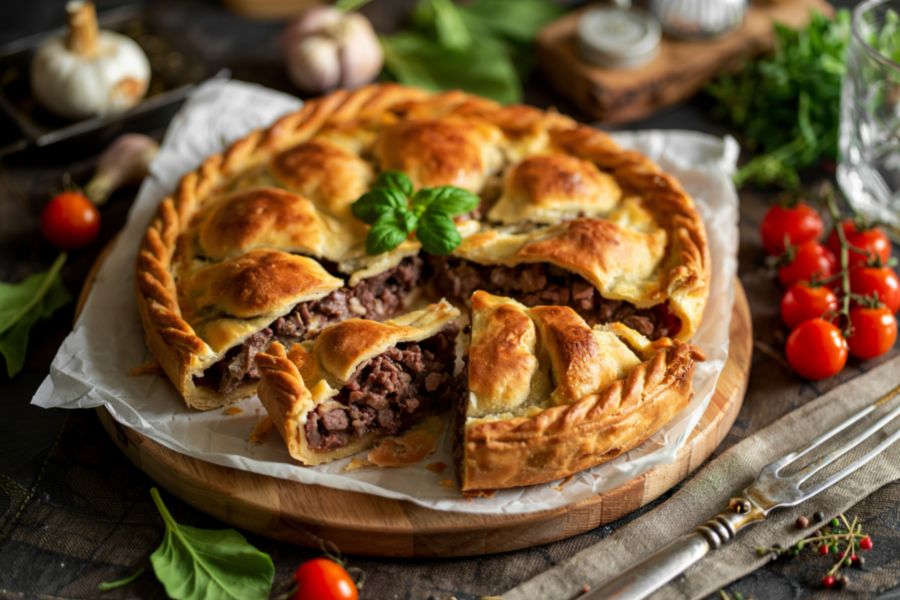
A meat pie with roots in French-Canadian tradition dating back centuries, tourtière is as much a ritual as a recipe. Made with ground pork, beef, or game and seasoned with warming spices, then baked in a flaky pastry shell. Every family has its own variation, and no two are quite the same. In Quebec, Christmas Eve without tourtière is unthinkable. - Flatbread/Bannock (RESEARCH AND REWRITE)
Origin: Indigenous peoples/Scotland
A simple flatbread of flour, fat, and water, bannock arrived with Scottish fur traders in the 18th and 19th centuries. The word comes from the Gaelic bannach. Indigenous peoples had their own flatbread traditions long before contact, made from camas bulbs and other plants, but bannock is a different food with a different history. It was adopted and adapted across the country, often out of necessity once traditional food sources were cut off, and government rations replaced what the land had always provided. Today it’s a fixture at powwows, family tables, and Indigenous-owned restaurants from coast to coast. - Hodge podge
Origin: Nova Scotia
Hodge Podge is a traditional Nova Scotia dish built around the first vegetables of summer — usually baby potatoes, carrots, peas, and beans simmered in a light cream and butter sauce. It’s simple, seasonal cooking that leans heavily on freshness rather than seasoning or presentation. - Figgy duff
Origin: Newfoundland
Figgy Duff is a traditional Newfoundland pudding usually made with flour, raisins, sugar or molasses, and spices, then boiled in a cloth bag. Despite the name, it typically does not contain actual figs. In older Newfoundland usage, raisins were sometimes referred to as “figs.” It’s commonly served with a Jiggs dinner, where it cooks in the same pot as the salt beef and vegetables.
- Peameal bacon
Origin: Toronto, Ontario
Often confused with back bacon, peameal bacon is a wet-cured pork loin rolled in cornmeal, giving it a distinctive golden crust when fried. The name comes from an era when the cured loin was rolled in ground yellow peas to preserve it. After the First World War, cornmeal replaced the peameal, but the name stuck. Today it is closely tied to Toronto, where peameal bacon sandwiches became a longtime staple at St. Lawrence Market and helped turn the dish into one of the city’s best-known foods. - Butter tarts
Origin: Ontario
A small tart shell filled with butter, sugar, and egg, baked until the centre turns rich and sticky. Butter tarts prompt strong opinions and across Canada, people still argue over one important detail: raisins or no raisins. Ontario alone has butter tart trails, festivals, and bakeries people will drive hours to visit. - BeaverTails
Origin: Ontario
A BeaverTail is a flat, hand-stretched pastry fried until golden and topped with any number of sweet combinations, from cinnamon sugar to maple butter. The first BeaverTails were sold at the Killaloe Craft and Community Fair in 1978. They have since become a fixture at outdoor winter events and tourist destinations across the country. They are unapologetically indulgent and entirely Canadian. - Montreal smoked meat
Origin: Montreal, Quebec
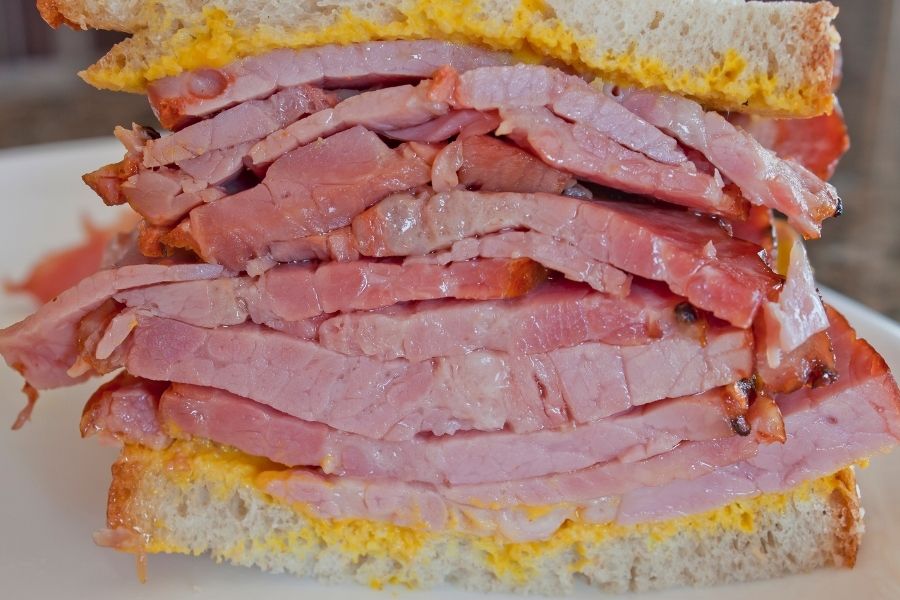
A cured and smoked beef brisket, seasoned with a distinctive blend of spices and sliced thick before being piled high on rye bread with yellow mustard. Its origins are tied to Montreal’s Jewish immigrant community of the late 19th and early 20th centuries, though exactly who made it first and where the recipe originated remains disputed. What is not disputed is Schwartz’s Deli on Saint-Laurent Boulevard, open since 1928 and still the standard by which all others are measured. - Ginger beef
Origin: Calgary, Alberta
Crispy deep-fried beef strips tossed in a sweet, tangy ginger sauce — ginger beef was born in Calgary in the mid-1970s at the Silver Inn Restaurant, opened by two sisters from Hong Kong and their husbands. Looking to blend Chinese cooking traditions with Alberta’s love of beef, the family developed a dish with the crunch of a french fry and the flavour of a Chinese kitchen. It spread across Western Canada and became a staple of Chinese-Canadian restaurants, a uniquely Canadian invention. - Flapper pie
Origin: Prairie provinces
A prairie classic that has largely vanished from modern menus, flapper pie is a custard pie built on a graham cracker crust and topped with meringue. It appears to draw its name from the 1920s flappers and was a staple of farm kitchens and church suppers across Manitoba and Saskatchewan through much of the 20th century, made from ingredients that were always on hand.